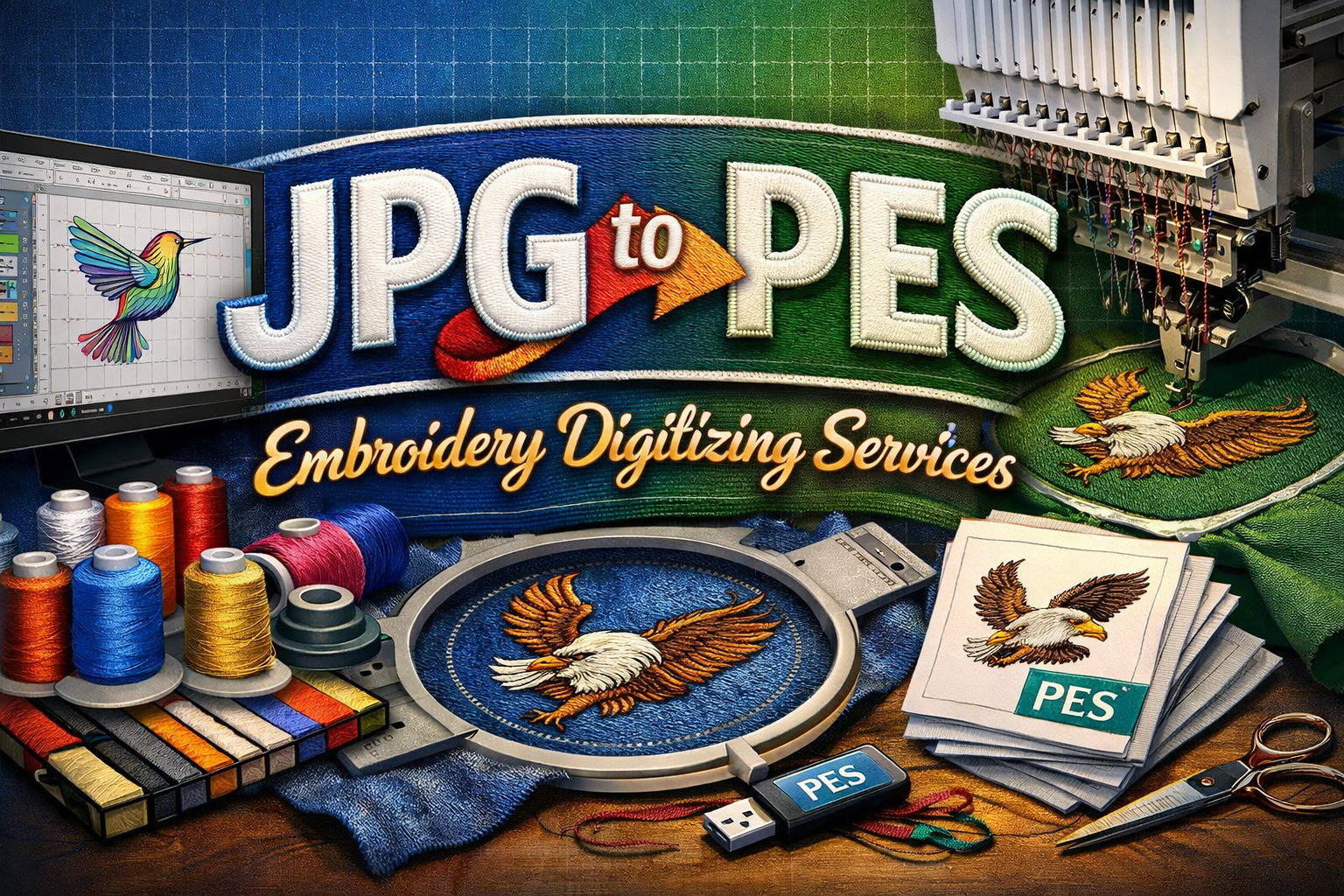
JPG to PES Conversion – Professional Embroidery Digitizing Services
In the world of custom embroidery, turning a simple image into a stitch-ready file is where the real magic happens. If you’ve ever tried to upload a JPG file directly into an embroidery machine, you already know—it doesn’t work. That’s because embroidery machines don’t read images; they read stitch files. This is where JPG to PES conversion comes into play.
Whether you're a business owner, fashion designer, or hobbyist, converting JPG images into PES files is an essential step in achieving high-quality embroidered results. In this guide, we’ll break down everything you need to know about JPG to PES conversion, why it matters, and how professional embroidery digitizing services can make all the difference.
What is a JPG to PES Conversion?
A JPG file is a standard image format used for digital photos and graphics. On the other hand, a PES file is a stitch-based file format used by embroidery machines, particularly Brother and Babylock machines.
Converting a JPG to PES isn’t a simple file conversion like changing a PNG to JPG. Instead, it involves a detailed process called embroidery digitizing, where a skilled digitizer manually recreates the image using stitches, paths, and thread instructions.
Why You Need Professional Digitizing for JPG to PES
Many people assume there are automatic tools that can convert JPG to PES instantly. While such tools exist, they often produce poor-quality results. Here’s why professional digitizing is crucial:
1. Precision and Accuracy
Professional digitizers analyze your image and determine the best stitch types, directions, and densities. This ensures your final embroidery looks clean and detailed.
2. Fabric Compatibility
Different fabrics require different stitch settings. A professional service adjusts the PES file according to whether you're stitching on cotton, denim, leather, or polyester.
3. Thread Optimization
Digitizing experts minimize thread breaks and unnecessary trims, ensuring smooth machine operation and saving time.
4. Clean Finishing
Auto-conversion tools often result in messy stitching, overlapping threads, and poor outlines. Manual digitizing guarantees a polished, professional look.
The Process of Converting JPG to PES
Understanding the digitizing process helps you appreciate the skill involved. Here’s how professionals convert your image:
Step 1: Image Analysis
The digitizer reviews your JPG file to assess complexity, colors, and fine details.
Step 2: Vector Interpretation
The image is broken down into shapes and layers. Each element is assigned a specific stitch type.
Step 3: Stitch Mapping
Different stitch types are applied, such as:
Satin stitches for borders and text
Fill stitches for large areas
Running stitches for fine details
Step 4: Pathing and Sequencing
The digitizer defines the stitching order to reduce thread jumps and trims.
Step 5: File Conversion
The final design is exported as a PES file compatible with your embroidery machine.
Step 6: Testing
A test run is often performed to ensure the design stitches perfectly without errors.
Benefits of High-Quality JPG to PES Conversion
Investing in professional embroidery digitizing services offers multiple advantages:
Superior Design Quality
Your embroidery will closely match the original artwork, maintaining brand consistency.
Reduced Production Errors
A well-digitized file minimizes machine issues such as thread breaks or misalignment.
Faster Production
Optimized stitch paths mean quicker embroidery runs, saving time and costs.
Scalability
Whether you need a small logo or a large back design, a properly digitized PES file scales efficiently.
Common Challenges in JPG to PES Conversion
Not all images are easy to convert. Here are some challenges digitizers often face:
Low-Resolution Images
Blurry or pixelated JPG files make it difficult to define edges and details.
Complex Designs
Highly detailed artwork may need simplification to ensure clean stitching.
Color Gradients
Embroidery machines don’t handle gradients well, so they must be converted into solid stitch patterns.
Small Text
Tiny fonts can become unreadable if not digitized carefully.
A professional digitizer knows how to overcome these challenges while maintaining the integrity of your design.
Choosing the Right Embroidery Digitizing Service
With so many services available online, choosing the right one can be overwhelming. Here’s what to look for:
Experience and Expertise
Look for a service with a proven track record in embroidery digitizing.
Quick Turnaround Time
Reliable providers offer fast delivery without compromising quality.
Affordable Pricing
Avoid extremely cheap services—they often rely on auto-digitizing tools.
Revision Policy
A good service offers free or low-cost revisions to ensure satisfaction.
Customer Support
Responsive communication is key, especially for custom projects.
Industries That Benefit from JPG to PES Conversion
Embroidery digitizing is widely used across various industries:
Fashion and Apparel
Custom logos, monograms, and decorative designs on clothing.
Corporate Branding
Uniforms, caps, and promotional items featuring company logos.
Sports Teams
Team logos and player names stitched onto jerseys.
Promotional Products
Bags, towels, and accessories with branded embroidery.
Personal Use
Custom gifts, home décor, and DIY embroidery projects.
Tips for Getting the Best Results
To ensure high-quality output, follow these simple tips:
Provide a high-resolution JPG file
Avoid overly complex designs
Specify your fabric type and size requirements
Clearly communicate your expectations
Choose a professional digitizing service
Why Manual Digitizing is Better Than Auto Conversion
While automatic software might seem convenient, it lacks the human touch needed for precision. Manual digitizing ensures:
Better stitch control
Accurate design interpretation
Professional finishing
Reduced machine errors
In embroidery, quality matters—and manual digitizing delivers that quality every time.
Final Thoughts
Converting JPG to PES is not just a technical process—it’s an art. It requires skill, experience, and attention to detail to transform a simple image into a beautifully stitched design.
If you’re serious about achieving professional embroidery results, investing in expert embroidery digitizing services is the way to go. From improved quality to smoother production, the benefits far outweigh the cost.
Whether you need a logo for your business, a design for your clothing brand, or a personalized gift, JPG to PES conversion is the first step toward bringing your vision to life—one stitch at a time.